

Face Reading and Aesthetic Surgery: Psychological Impact and New Perspectives for Doctors and Clinics

Updated: Mar 5
Why the Psychological Impact of Aesthetic Surgery Is Coming into Focus
Cosmetic surgery is no longer a marginal phenomenon. In the United States alone, several million facial procedures are performed each year, ranging from Rhinoplasty and Facelifts to minimally invasive treatments such as Botox or Fillers. Demand is also continuously increasing in Europe. While medical education, surgical technique, and aesthetic outcomes remain the primary focus, another aspect is increasingly moving to the forefront: the psychological impact and the altered perception following an aesthetic procedure.
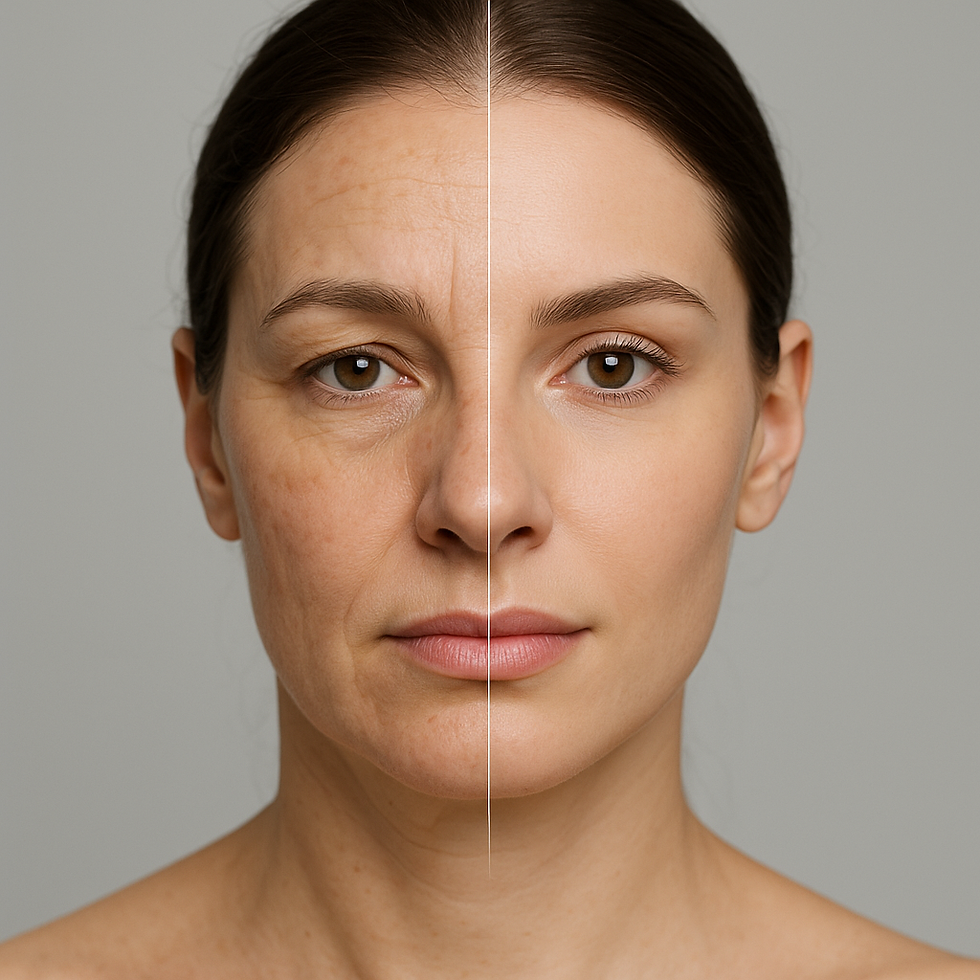
Patients do not only ask themselves: “What will I look like afterwards?”, but also: “How will I be perceived by others?”This is precisely where a gap emerges between surgical practice and psychological counseling. Face Reading in Aesthetic Surgery can close this gap by providing the language for what patients intuitively feel: that every change in the face also means a change in social perception.
Table of Contents
Psychological Impact of Aesthetic Surgery: Current Status in the USA and Europe
Informed Consent Practices in the USA
In the USA, psychological counseling in plastic surgery is more firmly established than in Europe. Professional societies such as the American Society of Plastic Surgeons (ASPS) and the American Academy of Facial Plastic and Reconstructive Surgery (AAFPRS) recommend screening tools to check patients for Body Dysmorphic Disorder (BDD) or unrealistic expectations.
In many clinics, the psychological impact of aesthetic surgery is at least addressed indirectly: for example, through expectation management or the reminder that procedures not only change outward appearance but also self-image. Explicit counseling on how specific facial features affect attractiveness, trustworthiness, or dominance, however, is still rare.
Informed Consent Practices in Europe
In Europe, regulatory requirements are often stricter than in the United States (e.g., GMC guidelines in the UK, BAAPS recommendations, and national regulations in Germany, Austria, and Switzerland). The focus here lies on medical-legal safeguards, in particular the obligation to provide comprehensive informed consent.
Psychological aspects are usually considered in Europe only in the context of contraindications (such as BDD). A structured consultation on the social impact of aesthetic changes, however, has so far been scarcely established — representing a clear market gap compared to the U.S.
Perception After Aesthetic Surgery: What Studies Reveal
Rhinoplasty (Nose Surgery)
Several studies show that a nose surgery does not only increase perceived attractiveness but can also influence the perception of trustworthiness and competence. Even small modifications to the nasal bridge or the tip of the nose can significantly change the overall interplay of facial features.
Facelifts and Rejuvenation
Research shows that after a facelift, patients are perceived by neutral observers as younger, healthier, and more vital. The level of likeability also increases in many studies.
Chin, Jawline, and Cheekbones
Corrections in this area primarily influence the perception of dominance and strength. A more pronounced chin or more prominent cheekbones are often associated with assertiveness, self-confidence, and status.
Botox and Facial Expression
The so-called facial feedback hypothesis shows that Botox not only smooths wrinkles but also reduces emotional expressiveness. As a result, patients often appear cooler or more distant, which can have both positive and negative social consequences.
Challenges in Patient Education and Counseling
Management as a Central Challenge
Many physicians report that the greatest challenge in counseling is not the surgical procedure itself, but rather the expectations of patients. Some expect surgery to bring about a comprehensive transformation of their social relationships, professional success, or partnerships.
Lack of Language for Perception Effects
While physicians can provide precise information about medical risks and outcomes, they often lack the language to describe how a change in facial features alters social perception. Patients ask questions such as: “Will I appear softer?”, “Will I look more trustworthy?”, or “Will this make me seem younger or more authoritative?” — and physicians face a clear gap here.
Legal and Economic Risks in Europe
Increasing Disclosure Obligations for Clinics and Physicians
In Europe, the legal requirements for plastic and aesthetic surgery are steadily increasing. Informed consent no longer means merely informing patients about surgical risks and possible complications. Guidelines such as those from the Royal College of Surgeons (UK) or BAAPS explicitly emphasize the duty to inform patients about realistic expectations and potential psychological consequences.
Especially in Germany, Austria, and Switzerland, clinics are increasingly required to demonstrate comprehensive expectation management. If surgery results in dissatisfaction, social isolation, or psychological crises, the risk is high that patients will claim they were not adequately informed. Even without surgical error, this can lead to lawsuits and compensation claims.
The economic consequences are significant:
Liability risks from civil lawsuits
Rising insurance premiums for medical malpractice coverage
Reputational damage in a highly competitive market
For physicians and clinics, this creates a double challenge: they must provide legally sound patient information while also meeting the growing psychological counseling needs of their patients.
A structured face-reading consultation in aesthetic surgery offers clear added value: it helps make the psychological impact of facial changes transparent, manage expectations early, and prevent misunderstandings. In doing so, it directly contributes to the legal protection and economic stability of a practice.
Face Reading in Aesthetic Surgery: A Complementary Tool
What is Face Reading?
Face Reading (Miàn Xiàng) is an ancient tradition of Chinese physiognomy that interprets the face as a mirror of personality and health. In modern Western practice, face reading is increasingly used as a science of perception: Which signals do facial features send, and how are they read by others — consciously or unconsciously? How does a personal Face Reading work?
Benefits for Physicians and Clinics
Enhanced patient counseling: Face Reading provides physicians with the language to clearly explain the psychological impact of aesthetic procedures.
Market differentiation: Clinics that also address “social perception and outward impact” stand out from competitors.
Improved expectation management: Patients feel seen and understood — unrealistic expectations can be identified earlier.
Compliance and ethics: Structured counseling ensures that patient education is not only medically sound but also psychologically informed.
Market Opportunities and Gaps
USA: Awareness exists, but specialized counseling is lacking
In the USA, there are already CME courses on psychology in aesthetic medicine (e.g., Allergan AMI, Galderma GAIN). However, a dedicated module focusing on the social perception after facial procedures is still missing. This is exactly where Face Reading can provide a valuable complement.
Europe: Strict regulation, but little psychological counseling
In Europe, the strong focus lies on medical standards. Psychological counseling usually takes place only in exceptional cases. This opens a clear gap: patients are looking for orientation, while physicians need tools for expectation management.
Concrete Areas of Application for Face Reading in Aesthetic Surgery
Rhinoplasty and Trustworthiness
How does a smaller, straighter nose change the way others perceive someone? What signals does it send in professional and private contexts?
Jawline, Chin, and Dominance
What role does a pronounced jawline play in the perception of strength and self-confidence? What psychological risks arise from exaggerated changes?
Eyes and Brows: Openness and Severity
How do brow lifts or eyelid corrections influence the emotional readability of the face?
Lips and Sensuality
How are fuller lips interpreted, and when does the effect tip into the unnatural?
How does rhinoplasty affect one’s aura?
What is the actual psychological impact of facelifts?
Why is patient counseling on post-surgery perception so essential?
Conclusion: Why Face Reading Is a Future Topic for Aesthetic Surgeons
The psychological impact of aesthetic surgery will become a decisive factor for clinics and physicians in the coming years, both in the USA and in Europe. Patients want more than a beautiful result: they want to understand how their social perception, self-image, and outward impact will change.
This is where Face Reading in aesthetic surgery offers an innovative approach that combines tradition, perception psychology, and clinical practice. Integrating this knowledge not only creates added value for patients but also positions clinics as pioneers in a growing market segment.
Would you like to learn more about Face Reading?
Would you like to understand not only yourself, but also other people on a deeper level? In the Foundation Training, you learn the fundamentals of Face Reading and afterwards you will be able to assess yourself and others accurately and with empathy.
Further Articles
If visible marks raise questions about individuality and life themes, this article explores fire marks with sensitivity and without judgment.
If subtle features in the lower face catch your attention, this article explores how inner tension and expression can become visible there.
If you want to understand how exhaustion and emotional strain may show around the eyes, this article approaches the topic with care and depth.
If you’d like to place individual features in a larger context, this article provides a clear and accessible structural overview.
If you’re interested in how empathic perception can support teachers and learning relationships, this article shows Face Reading in a pedagogical context.


